
The V-shaped rebound has been aided by a gush of liquidity flooding the global financial system, thanks to balance sheet expansion.

According to experts, work from home, volatility in stock markets worldwide, and redemption pressures compelled investors to defer new investment plans.

Investors who issued units in liquid and overnight funds, as well as those with a short-term holding of less than 30 days, are likely to be impacted the most, say experts.

Other measures being considered include relatively stringent KYC norms and a separate standard operating procedure for approval, renewal, and fresh investment from India's neighbouring countries.

The mid-cap universe - comprising firms that rank 101-250 in terms of m-cap - could see as many as 17 new stocks move out. Similarly, over half a dozen stocks could exit the large-cap universe, which is defined as the top 100 entities in terms of m-cap.

The country was, in February, put on the list of jurisdictions that require increased monitoring. These are done to counter money-laundering, terrorist financing, and proliferation financing in a more efficient manner.

Market experts said disruptions caused by the pandemic - to businesses as well as the filing process - and the sharp decline in valuations were the reasons behind fewer new companies wanting to tap the capital markets.

Many believe that the surge in the markets defy economic reality and is being fuelled by aggressive monetary easing by central banks across the world.

This is the fastest the markets have taken to get out of bottom, compared to previous crises.

The RBI is of the view that it cannot carry out satisfactory due diligence for granting registration because the funding is from a jurisdiction that has been identified by FATF as having weak measures to combat money laundering and terrorist financing.

The rights issue price has been set at Rs 1,257 a share, a discount of nearly 14 per cent to the last closing price of Rs 1,459. The company had set May 14 as the record date for the rights issue, which meant shareholders as on that day would be eligible to apply. Shareholders will be able to apply for one share for every 15 shares held.

FinMin had, recently, notified changes in FDI rules that made prior approval of the government mandatory for foreign investments from countries that share a land border with India. Hong Kong was ranked 14th on the list of countries with FDI flows to India, contributing $4.2 billion between April 2000 and December 2019, the data from DPIIT shows. India received FDI worth $2.34 billion from China in the same period.
Taking credit risks in shorter-tenure funds can help jack up returns considerably, boosting sales.

The regulator last week reached out to custodians for beneficial ownership information of investors coming from China, Hong Kong, and 11 other countries.

Being part of category-I implies lower compliance burden, simplified know-your-customer norms and documentation requirements, and fewer investment restrictions.
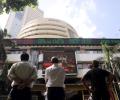
The bulk of the erosion in terms of value took place in India's most-valued firms. For instance, Mukesh Ambani-led Reliance Industries alone has lost Rs 3.8 trillion in m-cap, followed by HDFC Bank, which has seen its value erode by Rs 2.45 trillion and Tata Consultancy Services (TCS), which has lost Rs 1.85 trillion to stand at Rs 6.24 trillion, making it India's most-valued.

'The only thing that is safe right now are government securities.'

According to experts, the Nifty has continued to form lower top-lower bottom formations, a trend seen in the last five weeks, and witnessed sharp selling towards 9,700 zones.

Experts said the 20 per cent drop in the market poses a challenge for companies that have set the ball rolling on their IPO plans as valuations will now have to realign. This could entail more dilution or lowering of the issue size.
VIX is meant to indicate investors' perception of the annual market volatility over the next 30 calendar days. The higher the value, the higher is the expected volatility and vice versa. VIX touched its historical peak of 85.13 on November 17, 2008, in the aftermath of the collapse of Lehman Brothers. In the past five years, it has stayed below 30.
 © 2026 Rediff.com - Investor Information - Advertise with us - Disclaimer - Privacy Policy - Sitemap - Feedback - About us - Terms of use - Grievances